


Topics:
Understanding the H-2A Temporary Agricultural Visa Program
Understanding the H-2A Temporary Agricultural Visa Program
July 24, 2025
Understanding the H-2A Temporary Agricultural Visa Program
Under the Immigration Nationality Act, the federal government manages work visa programs to support employers with temporary and permanent workforce needs. Where there is a shortage of U.S. workers for temporary or seasonal agricultural labor or services, the H-2A visa program allows foreign agricultural workers to enter the country temporarily, provided certain conditions are met.
Applying for the H-2A program can be complex. To streamline the process, the Office of Foreign Labor Certification (OFLC) now offers an online application process. Here’s how to navigate it.
Before hiring H-2A workers, employers must:
- Contact former U.S. workers employed in the same occupation during the past year to solicit their return.
- Maintain a report listing all U.S. workers who applied, whether they were hired, and the lawful, job-related reasons for not hiring any applicants.
- Hire all able, willing, and qualified U.S. workers who apply during the recruitment period.
- Ensure any restrictions imposed on U.S. job applicants – such as experience requirements or background checks – are applied to H-2A workers.
- Provide at least the same benefits, wages, and working conditions to U.S. workers as offered to H-2A workers.
H-2A Agricultural Worker Program Overview
- Obtain a labor certification from the Department of Labor (DOL).
- Secure an approved petition from the Department of Homeland Security (DHS) for the specific number of workers.
- After receiving DHS petition approval, employers typically engage foreign labor recruiters, and workers apply for a visa with a Department of State (DOS) consulate.
- Workers arrive at a port of entry where DHS Customs and Border Protection (CBP) verify eligibility for admission and length of stay.
How to get a Labor Certification
- Submit a job order to your state workforce agency (SWA).
- Submit an H-2A application with supporting documentation.
- Conduct additional recruitment for U.S. workers and DOS posts the job.
- Report recruitment efforts and any other required documentation to DOL for final review.
- Receive a final certification or denial from the DOL.
The Adverse Effect of Wage Rate (AEWR)
The AEWR is the prevailing wage rate employers must pay H-2A workers. Agricultural employers should familiarize themselves with the Standard Occupational Classification (SOC) codes – last updated in 2018. SOC codes classify jobs based on job duties and determine the prevailing wage; thus, it is essential for employers to ensure work tasks and job details are accurate. Agricultural employers should also familiarize themselves with the Foreign Labor Application Gateway (FLAG) portal, the online platform for managing H-2A applications and accessing AEWR information.
Meals, Transportation, and Housing
Agricultural employers must provide either three meals daily or access to free, convenient cooking and kitchen facilities. Providing workers with cash, stipends, or access to third-party vendor arrangements requires justification. The way meals are provided should be disclosed to workers, including any appropriate meal charges.
Employers must provide sufficient details to their workers, SWA, and the OFLC Certifying Officer, of the employer’s daily transportation plan, including mode of transportation, estimated transportation schedule, number of vehicles being used, type of vehicle, and seating capacity for each vehicle.
Housing must be sufficient to accommodate the number of workers. Employers can select between employer-provided housing or rental/public accommodation.
Tips & Reminders:
- Have all documentation ready before applying.
- Use the FLAG system to file your H-2A job order and application as early as the regulations permit.
- Work closely with the SWA and communicate throughout the H-2A application process – the DOL website has contact information for every SWA.
Additional H-2A Resources:
Fact Sheet #26: Section H-2A of the Immigration and Nationality Act
For questions related to the processing of H-2A applications, contact the OFLC program help desk at tlc.chicago@dol.gov.
Get to know NFIB
NFIB is a member-driven organization advocating on behalf of small and independent businesses nationwide.
Related Articles

Related
July 24, 2026
NFIB’s Josh McLeod in Washington Examiner: Congress Needs to Repeal Invasive Beneficial Ownership Reporting Mandate
NFIB’s Josh McLeod in Washington Examiner: Congress Needs to Repeal Invasive Beneficial Ownership Reporting Mandate
Small businesses urge lawmakers to secur…
Read More

Related
July 23, 2026
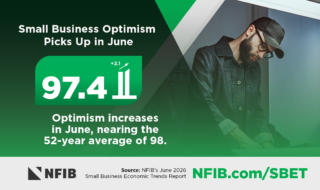
Small Business Optimism on the Rise in June
Small business optimism in the June Small Business Economic Trends report increased, while the Employment Index remained steady. The Uncertainty Index fell two…
Read More

Related
July 23, 2026
AUDIO: Small Business Rundown Highlights Why BOI Remains a Major Threat to Small Businesses
Podcast episode features NFIB Member Nancy Marr, U.S. Rep. Brad Finstad, and NFIB’s Josh McLeod explaining what to know about Beneficial Ownership reporting
Read More
Related
July 22, 2026
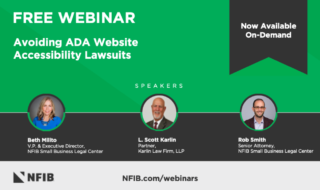
Webinar: Tips to Protect Small Businesses from Predatory ADA Lawsuits
NFIB’s webinar features legal experts who explore predatory Americans with Disabilities Act violation lawsuits and how small business owners can protect themse…
Read More