


Topics:
May 22, 2026
Despite setbacks, NFIB defeated 90% of bills most harmful to small businesses
SESSION OVERVIEW
The 2026 session of the 69th Washington State Legislature was a challenging one for small business owners, but would have been worse without NFIB’s advocacy efforts.
— 60-day session adjourned Friday, March 12
— 253 bills tracked; supported 84 (33%), opposed 108 (43%), and won amendments allowing us to be neutral or monitored 61 (24%) others
— 6 priority oppose bills signed into law despite our objections, resulting in a 90% success rate killing bills most harmful to small business
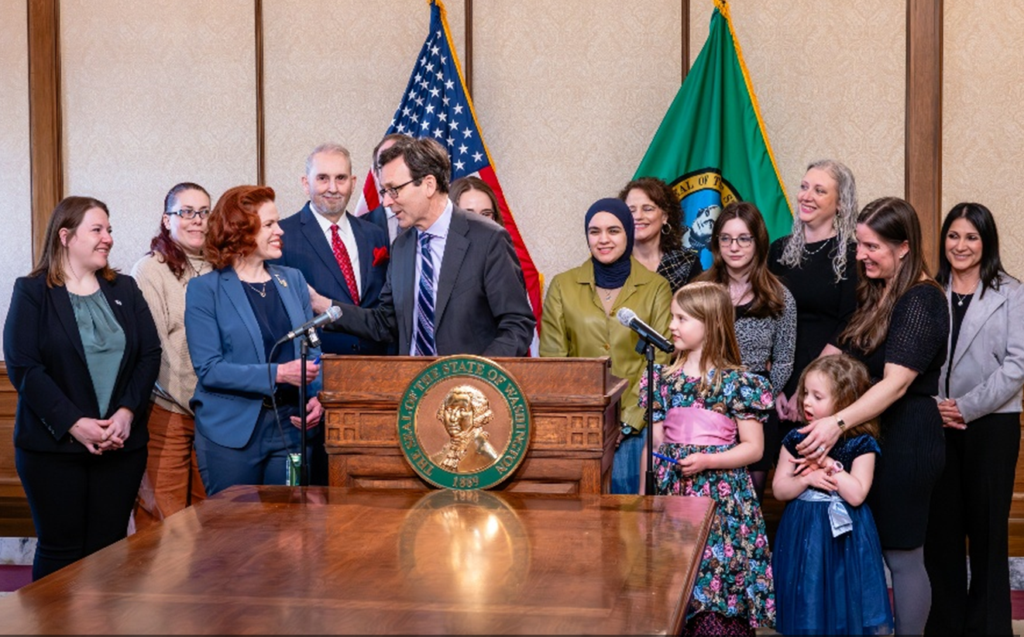
— 2 NFIB priority bill signed into law by Gov. Bob Ferguson: HB 2479 and HB 2405
— The state director testified 30 times during the eight weeks of session
VICTORIES
NFIB’s legislative victories for the 2026 session were more about bills we defeated than bills we passed this year. This is not unusual, particularly given the supermajorities controlling both chambers of the Legislature. Nonetheless, NFIB won enactment of two priority bills:
— HB 2479 – Wage recovery fund. NFIB co-chaired a work group established by 2024 legislation to recommend ways to improve and expedite the recovery of wages owed to victims of wage theft. NFIB negotiated a package of recommendations that won unanimous approval from the work group, leading to the introduction of HB 2479. This legislation gives the Department of Labor & Industries (L&I) greater discretion to prioritize and target wage claim investigations; increases penalties on employers engaging in wage theft; removes the cap on those penalties; establishes a penalty matrix similar to that used in workplace safety enforcement to mitigate excessive penalties, particularly on small employers; and directs those penalties into a new Wage Recovery Fund that will provide qualifying victims partial advanced payment against their wage claim to help avoid significant financial harm. The bill won unanimous support in both the state House and Senate, and was signed into law.
— HB 2405 – PTSD treatment pilot program. NFIB supported this agency request legislation authorizing the Department of Labor & Industries to implement a new pilot program in the workers’ compensation system that will provide earlier intervention for first responders suffering from post-traumatic stress disorder (PTSD). These claims typically cost the system $650,000 with 20% of them going to permanent pension – at least 10 times the pension rate for all other claims. Pensions average more than $1 million each. Under the pilot program, medical treatment will be provided while L&I adjudicates the claim. New, specialized treatment guidelines are being developed, and L&I is working to expand the number of providers able and willing to treat these patients. NFIB is optimistic that the pilot will lead to better outcomes for these workers, and begin reducing the cost of these claims. NFIB has been a leading opponent of allowing PTSD claims in other occupations due to the high cost and low success rate of existing cases, defeating HB 1002, HB 1070, SB 5043, and SB 5882.
NFIB also played a key role killing these bills that could have been disastrous for Washington small businesses:
— HB 1181, HB 1764, SB 5578 – $25 minimum wage, plus three weeks’ paid vacation, and paid bereavement leave. NFIB’s advocacy efforts during the 2025 session prevented these bills from even receiving a hearing this year.
— HB 2372, SB 6067 – Workers’ compensation benefit increase. NFIB again defeated these bills that would have added 100% of health insurance premiums paid by employers to the calculation of workers’ compensation benefit payments, costing the system at least $500 million over the six-year projection. Proponents claimed the bills would allow injured workers to maintain health insurance for themselves and their families during treatment and recovery, but did not actually require workers to do so.
DEFEATS
Despite our best efforts, the Legislature passed several bills hostile to small businesses, including:
— SB 6346 – Millionaire Tax. NFIB vigorously opposed this new 9.9% income tax on federal adjusted gross income of more than $1 million annually. The bill specifically targets small businesses operating as sole proprietorships, partnerships, LLCs, and S-corps, while exempting full C-corporations. NFIB offered amendments seeking to exempt these small business owners. Several NFIB members joined the state director testifying against the bills in both Senate and House hearings. Hundreds of members contacted legislators urging a “no” vote, and asked the governor to veto the bill, through our Action Alerts. We ran drive-time radio ads across the state, and digital ads on targeted news sites. Our opposition was covered in TV, radio, traditional and online newspaper, and podcast interviews. NFIB also joined a lawsuit seeking to overturn this new income tax as unconstitutional.
— HB 2105 – Immigrant Worker Protection Act. NFIB members and our Small Business Legal Center executive director, along with the state director, testified before House and Senate committees to oppose this bill from the state Attorney General. HB 2105 will require all employers to display a new poster advising workers of their rights (and added employer obligations) related to federal I-9 audits. Employers will be required to notify workers of a federal audit and audit results using materials provided by the Attorney General’s Office (AGO) through an online portal. The required documents must be in five languages determined by the AGO and distributed by employers through mail, email, text message, or telephone calls, depending on which method the employer typically uses to communicate with employees. The AG, workers, or worker advocates can sue employers for alleged violations of these new notification requirements.
— HB 2156, SB 5925 – Expanding Attorney General authority. We opposed two other bills expanding the authority of the Attorney General that appear to largely target businesses. HB 2156 allows the AGO to designate investigators as “limited authority Washington peace officers” who can investigate undefined “economic and financial crimes” and electronically issue search warrants. SB 5925 allows the AGO to issue “civil investigative demands” to businesses requiring the owner to provide documents, oral testimony, and written answers to questions from the agency related to suspected violations of the state or federal constitution, wage laws, or the state’s Law Against Discrimination – before any charges are filed or other legal action is initiated. NFIB believes this is a dangerous expansion of power that could subject small business owners to overlapping and duplicative investigations, enforcement actions, and litigation by the AGO and other state agencies.
— HB 2471 – Collective bargaining “trigger bill.” This legislation will allow the state Public Employment Relations Commission (PERC) to step in and enforce unionization and collective bargaining laws on private-sector employers if the federal National Labor Relations Act (NLRA), or the National Labor Relations Board that enforces it, is either repealed by Congress, or made inoperable the Administration or the courts. NFIB won changes to the bill that should exempt small businesses not already subject to the NLRA from PERC jurisdiction should that change occur. We remain opposed to the bill because it would allow unionization through card check / cross check, instead of requiring secret ballot elections to certify a union.
— SB 5847 – L&I medical provider network. NFIB opposed this bill which will weaken L&I’s medical provider network and the treatment guidelines used in workers’ compensation claims. These changes are expected to increase the average time injured workers are off the job, and add $35 million in annual costs to the workers’ compensation system. The bill also allows the Department of Labor & Industries to hire approximately 150 new claims managers at a cost of $15.6 million per year.
Click here for a printable version of this report.
State:
Get to know NFIB
NFIB is a member-driven organization advocating on behalf of small and independent businesses nationwide.
Related Articles
Related
May 26, 2026
New NFIB Op-Ed: Unleash Small Business Growth in Additional Reconciliation Bill
New package should bolster small business success with crucial tax, regulatory, and healthcare reforms
Read More

Related
May 20, 2026
NFIB Names Fred Horner from Massillon as 2026 Small Business Champion
The award recognizes NFIB members for their dedication to Ohio small businesses.
Read More
Related
May 20, 2026
2026 End-of-Session Report on the Hawaii State Legislature
NFIB monitored 22 bills affecting small businesses the most
Read More

Related
May 20, 2026
Post-Primary Comment on the Defeat of Measure 120
Voters send clear message: State government should live within its means
Read More