


Topics:
What a New DOJ Memo Means for Small Business Hiring Practices
What a New DOJ Memo Means for Small Business Hiring Practices
June 16, 2026
A recent U.S. Department of Justice (DOJ) legal opinion could significantly affect how federal discrimination law is applied to small businesses.
On June 9, 2026, the DOJ’s Office of Legal Counsel (OLC) issued a memorandum addressing “disparate impact” liability under Title VII of the Civil Rights Act—the theory that employers can be held liable for policies that disproportionately affect certain groups, even without an intent to discriminate.
While the memo is technical, its message is straightforward: DOJ believes current enforcement of disparate impact law goes too far.
For small businesses, that could mean less regulatory uncertainty—but also some continued legal complexity.
A Quick Refresher: What Is “Disparate Impact”?
Under Title VII, discrimination includes “disparate treatment,” or intentional discrimination, and “disparate impact,” or unintentional or statistically-demonstrated discrimination. Disparate impact theories often center on neutral policies or practices—such as a hiring test or background check—that lead to disproportionate outcomes on certain groups.
The framework for disparate impact liability under Title VII dates back to the Supreme Court’s decision in Griggs v. Duke Power Co. (1971) and was later incorporated into federal law by Congress in 1991.
What the DOJ Memo Says
The DOJ’s new opinion takes a more limited view of when disparate impact liability should apply:
- Statistical differences alone should not drive liability; the law is meant to ensure equal treatment—not equal outcomes.
- Current Equal Employment Opportunity Commission (EEOC) guidance may be unconstitutional because it relies too heavily on outcomes without sufficient evidence of discriminatory intent.
- Employers should not be pushed toward race-based decision-making, which disparate impact liability forces them into.
- Business practices should be evaluated based on whether they serve a legitimate business goal.
What This Means for Small Businesses
Although this memo does not change the law overnight, it signals a potential shift in enforcement. For small business owners, several practical takeaways stand out.
Greater Clarity for Common Hiring Practices
Small businesses often worry that standard hiring tools—like education requirements or background screenings—could expose them to liability if they produce uneven results. The DOJ’s position suggests these practices are generally acceptable if they are tied to legitimate business needs.
Reduced Emphasis on Statistical Outcomes Alone
Under current enforcement, employers can face scrutiny based on data showing disparities, even when policies are neutral. The DOJ’s opinion indicates that outcomes alone should not determine legality.
More Deference to Business Judgment
The memo reinforces that employment decisions should be judged based on their business rationale. For small business owners, this is a meaningful shift.
Potential Changes in Federal Enforcement
DOJ OLC opinions are binding on federal agencies. Under DOJ’s reasoning, businesses could see fewer cases based on disparate impact theories and a greater focus on intentional discrimination.
Important: The Law Has Not Changed (Yet)
Disparate impact liability remains part of Title VII, and courts still recognize it under current law. Small businesses should not assume that disparate impact cases or theories of liability are going to disappear overnight.
With that said, DOJ’s OLC opinions are binding on the Executive Branch and all federal agencies. This opinion should quickly transform EEOC enforcement priorities and guidance.
What Small Business Owners Should Do
- Use job-related criteria in hiring decisions
- Keep records explaining employment practices
- Apply policies consistently
- Stay informed about legal developments
Bottom Line
Small businesses have long faced uncertainty under disparate impact law. The DOJ’s memo points toward a more practical approach—one that focuses on fairness and intent while recognizing the realities of running a business.
If adopted more broadly, it could reduce regulatory burdens and give small employers greater confidence and flexibility in their decisions.
If you have any questions about disparate-impact liability or the DOJ’s memo, contact the NFIB Legal Center at info@nfib.org.
Updated June 15, 2026
Get to know NFIB
NFIB is a member-driven organization advocating on behalf of small and independent businesses nationwide.
Related Articles
Related
July 27, 2026
Podcast: State Tax Hikes on the Ballot This Year
Experts on the Small Business Rundown discuss proposed state tax increases and the impact higher taxes would have on small businesses across the nation.
Read More

Related
July 24, 2026
NFIB’s Josh McLeod in Washington Examiner: Congress Needs to Repeal Invasive Beneficial Ownership Reporting Mandate
NFIB’s Josh McLeod in Washington Examiner: Congress Needs to Repeal Invasive Beneficial Ownership Reporting Mandate
Small businesses urge lawmakers to secur…
Read More
Related
July 23, 2026
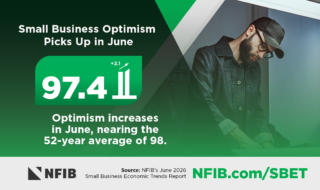
Small Business Optimism on the Rise in June
Small business optimism in the June Small Business Economic Trends report increased, while the Employment Index remained steady. The Uncertainty Index fell two…
Read More

Related
July 23, 2026
AUDIO: Small Business Rundown Highlights Why BOI Remains a Major Threat to Small Businesses
Podcast episode features NFIB Member Nancy Marr, U.S. Rep. Brad Finstad, and NFIB’s Josh McLeod explaining what to know about Beneficial Ownership reporting
Read More