


Topics:
Using AI for Your Small Business: Benefits, Risks, and Best Practices
Using AI for Your Small Business: Benefits, Risks, and Best Practices
July 7, 2026
Artificial intelligence (AI) is quickly becoming a standard business tool for small employers. According to one report, nearly 60% of small businesses are using AI in their day-to-day operations, such as hiring, management, and customer interactions. And this is just the tip of what AI can be used for.
For many business owners, AI offers an opportunity to save time, improve productivity, grow efficiently, and it may be a necessary tool to stay competitive in today’s markets. However, like any new technology, AI also presents legal and compliance risks that business owners should fully comprehend and consider as the technology evolves and becomes more common throughout the business world and in today’s society.
This article highlights those risks, discusses practical guidelines for responsible AI use, and covers the operational implications of navigating state-level AI regulations.
How Small Businesses Are Using AI
AI is relatively accessible and affordable. With low barriers to entry, AI can significantly improve productivity, helping business owners and employees accomplish more with limited time and resources. Recent data shows that individual productivity increases by 33% with the use of AI.
Small businesses are using AI for a variety of purposes, including:
- Creating and improving marketing content and campaigns;
- Drafting communications;
- Analyzing business data;
- Providing customer support; and
- Streamlining administrative tasks.
In addition to automating everyday operations, AI can also help business owners make more informed decisions. For example, businesses can use AI-powered tools to identify potential cash flow gaps, forecast inventory needs, and optimize workforce planning. AI research shows that 77% of small businesses report greater competitiveness against larger firms, 82% report enhanced operational efficiency, and 69% report consistent progress despite challenging circumstances and market volatility.
Hiring and Promotion With AI
Before implementing AI in hiring or promotion decisions, employers should understand how the tools work. Businesses that use AI tools in the recruiting process―such as HireVue, Paradox, and Eightfold―may be required to undergo independent bias audits or comply with certain disclosure laws.
In New York City, for example, Local Law 144-21 enforces transparency in the employment process to ensure federal anti-discrimination laws are not broken. When AI or other automated tools are used in recruiting and promotion selection, employers remain responsible for those tools if they unfairly discriminate against candidates based on protected characteristics like race, sex, or religion, even if the AI tools were administered by a third party.
Legal Risks of AI Use
Unlike many other areas of business regulation, there is no current federal legislation governing AI. Instead, rules and regulations are scattered across executive orders, agency guidance, industry-specific requirements, and state regulations.
As AI regulations evolve, employers should understand how AI technology is being used within their business and identify any state regulations, industry-specific rules, and compliance considerations that may apply. For instance, businesses operating in highly regulated sectors, such as healthcare and finance, may face additional rules governing automated decision-making, privacy, and data security.
Protecting Your Customers
Businesses must also consider how AI tools collect, store, and use customer data. Existing consumer protection laws and regulations generally prohibit deceptive or misleading business practices, including misrepresentation about how customer data is handled.
For example, businesses should be cautious about using customer information for AI training purposes or sharing data with third parties without proper disclosure. Business owners should carefully review the privacy practices and terms of service associated with any AI platforms they adopt.
Although there is no federal AI privacy law, many of the same legal principles that apply to customer data and privacy generally apply when AI is involved.
Best AI-Related Practices for Small Business Owners
As AI becomes more common in the workplace, businesses can reduce risk by following a few basic guidelines:
- Review all AI-generated content
- Avoid entering confidential, proprietary, or sensitive information into public AI tools
- Understand how AI tools collect, store, and use business and customer data by reviewing the terms of service of AI platforms you plan on using
- Maintain transparency with employees and customers when AI tools are used in ways that affect them
- Stay informed about evolving industry and state requirements
- Seek professional guidance before using AI for high-risk functions such as hiring, financial decisions, or compliance-related activities.
AI has the potential to help small businesses improve productivity, reduce administrative burdens, and boost competitiveness. At the same time, business owners should approach these new tools thoughtfully by understanding their capabilities, reviewing how customer and employee data is handled, and staying informed about evolving legal requirements.
Businesses that balance innovation with appropriate oversight will be better positioned to take advantage of AI’s benefits while minimizing potential risks.
For questions about AI use and regulations, reach out to the NFIB Legal Center at info@nfib.org.
Last Updated July 7, 2026
Get to know NFIB
NFIB is a member-driven organization advocating on behalf of small and independent businesses nationwide.
Related Articles
Related
July 27, 2026
Podcast: State Tax Hikes on the Ballot This Year
Experts on the Small Business Rundown discuss proposed state tax increases and the impact higher taxes would have on small businesses across the nation.
Read More


Related
July 24, 2026
NFIB’s Josh McLeod in Washington Examiner: Congress Needs to Repeal Invasive Beneficial Ownership Reporting Mandate
NFIB’s Josh McLeod in Washington Examiner: Congress Needs to Repeal Invasive Beneficial Ownership Reporting Mandate
Small businesses urge lawmakers to secur…
Read More
Related
July 23, 2026
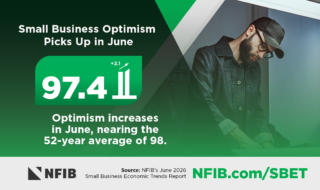
Small Business Optimism on the Rise in June
Small business optimism in the June Small Business Economic Trends report increased, while the Employment Index remained steady. The Uncertainty Index fell two…
Read More

Related
July 23, 2026
AUDIO: Small Business Rundown Highlights Why BOI Remains a Major Threat to Small Businesses
Podcast episode features NFIB Member Nancy Marr, U.S. Rep. Brad Finstad, and NFIB’s Josh McLeod explaining what to know about Beneficial Ownership reporting
Read More