Skip to content

Final PFML Mandate Exacerbates Biggest Small Business Challenges

Final PFML Mandate Exacerbates Biggest Small Business Challenges

May 18, 2023 Last Edit: June 5, 2025

Final PFML Mandate Exacerbates Biggest Small Business Challenges

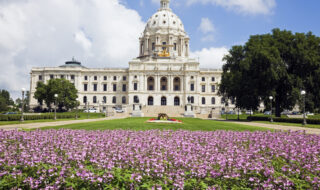
St. Paul (May 18, 2023) The National Federation of Independent Business in Minnesota, or NFIB, is expressing its disappointment with the House File 2 conference committee agreement, which imposes a government-run Paid Family and Medical Leave (PFML) program on small business owners and their employees. The Minnesota Senate is debating the bill today, its last stop before heading to Governor Walz’s desk. The final version of the PFML Mandate comes with a $1.5 billion per year payroll tax hike on small business owners, workers, and others and up to five months of paid leave per employee every year. The bill got worse for small business owners in conference committee, with the Minnesota Department of Employment and Economic Development gaining the ability to unilaterally increase the payroll tax in the first year of the program. The tax can increase every year, up to a maximum of 1.2% of FICA employee wages per year. “When politicians micromanage small businesses, it means fewer jobs, lower pay, and less opportunity,” said John Reynolds, NFIB State Director in Minnesota. “The costs of this mandate – higher payroll taxes and bigger workforce struggles – will escalate rapidly. Small businesses are still squeezed from inflation, supply challenges, and a chronic workforce shortage that is not going away.” Only four other states – Colorado, Delaware, Maryland, and Oregon – require the employer to share the cost of both the medical and family payroll tax. Compared to these states, the Minnesota mandate will have the longest leave length and most expensive wage replacement. Despite having less generous programs, each of the four states has a first year payroll tax rate above the 0.7% rate proposed in House File 2 “This proposal fundamentally misunderstands the needs and challenges of small business owners,” added Reynolds. “Basic math shows the PFML mandate is financially unsustainable at the proposed benefit levels.” Small business owners routinely report that labor quality and labor availability are among their biggest challenges. According to NFIB’s most recent monthly Jobs Report, 43% of owners reported job openings they couldn’t fill and 90% reported few or no qualified applicants for open positions. NFIB and its 10,000 members around the state, have been very vocal about how this legislation would impact their ability to operate and hire employees. You can hear their voices and find out more here.
Get to know NFIB

NFIB is a member-driven organization advocating on behalf of small and independent businesses nationwide.

Receive our newsletter and email notification
Knowledge is power. Let us help you stay informed with breaking legislative news, regulatory updates, business tips, and more.

Related Articles

Related
May 6, 2026
Bill to Eliminate Credit Card Swipe Fees on Sales Tax Heads to Governor’s Desk
Colorado’s small business community thanks the General Assembly for advancing swipe fee reform.
Read More Read More
Young stressed businesswoman sitting with laptop and touching head with shocked facial expression. Surprised business person looking at laptop computer worried and amazed with open mouth and big eyes
Related
May 6, 2026
NFIB Cautions Minnesota Lawmakers Against “Suitable Seating” Mandate
The mandate would be imposed on all Minnesota businesses, regardless of size
Read More Read More
Related
May 6, 2026
NFIB Celebrates the 20% Small Business Tax Deduction Being Made Permanent, Supports Increasing it to 23%
Making the Small Business Tax Deduction permanent was a huge win for small businesses and provides tax certainty. Now, NFIB is pushing to expand the tax deduct…
Read More Read More
Related
May 5, 2026
Give Small Businesses Relief by Suspending the Federal Fuel Tax
An opinion article discusses how energy costs impact small businesses and how Congress can provide relief by suspending the federal fuel tax.
Read More Read More

© 2001 - 2026 National Federation of Independent Business. All Rights Reserved. Terms and Conditions | Privacy Policy | Accessibility