


Topics:
April 13, 2022 Last Edit: June 5, 2025
Torrington NFIB member: if lawmakers do nothing, my already struggling small business faces huge tax increase
Small Business Highlights Crushing Crisis: Connecticut’s Unemployment Debt Crisis
NFIB held a press conference to ask lawmakers to use federal money to refill the Unemployment Insurance trust fund, which is in a crisis. If this fail to act, small business owners will be faced with a massive tax hike, on top of the other challenges they are already facing from the COVID-19 pandemic.
The state borrowed $888 million from the federal government to cover pandemic-driven unemployment compensation benefit claims. So far, $425 million in loan repayments have been made, however, employers are responsible for the remaining $463 million loan balance— facing four years of tax hikes, beginning this fall.
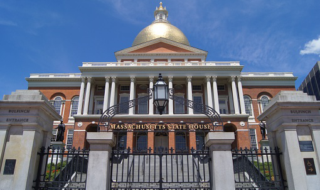
Wendy Traub, small business owner and President, Hemlock Directional Boring in Torrington and NFIB State Director in Connecticut, Andy Markowski spoke about the issue this afternoon on the steps of the state Capitol.
“The pandemic government-mandated shutdowns left thousands of small businesses in despair. Unfortunately, many were forced to close permanently, meanwhile, the rest of us are still trying to recover from loss of revenue and manpower that was the result of forces outside our control. Our business is attempting to grow its workforce, yet there is still a constant fear that the State may, once again, impose operating restrictions or develop new or increased taxes on business owners. This leads to uncertainty, which may limit our investments in new capital equipment or additional labor. For economic recovery to be successful in Connecticut, we must have faith that the government is recognizing and supporting our efforts.
The requirement of federal monies to secure Connecticut’s Unemployment Fund is a direct result of the State forcing most businesses to shut down, instead of giving us the opportunity to continue operating in a fashion that accommodated COVID restrictions, as was allowed by selected “big box” businesses across the state. Transferring the financial obligations of the repayment of the state’s Unemployment Fund debt to small business owners is incomprehensible. There can be no doubt that this debt is directly related to COVID and therefore there is no reason federal COVID relief dollars should not be used to eliminate this debt completely. Many other states have already done this, and it is inexcusable that ours as not sone the same,” said Wendy Traub, who with her husband own Hemlock Directional Boring out of Torrington.
Wendy Traub has been in business for more than 25 years, yet COVID and the unemployment spike and the looming tax increases are threatening to put the small business out of business.
Traub was forced to put her busy spring season on hold when the COVID restrictions first hit. All of Hemlock’s work was put on hold or canceled. It left the small business little to no revenue for the first eight months of 2020. Two years later, there are still challenges in the form of hiring workers, growing her workforce, and inflation issues. Traub wants to invest in Connecticut’s economy yet feels like lawmakers are making that impossible.
“Small business owners were grateful for the initial investment the legislature made last year to help mitigate the impact of looming unemployment tax increases. And while the legislature has recently made some positive steps to help small businesses recover from the pandemic, including actions last month to suspend the state’s gas tax, small business owners here in Connecticut are still hurting and are still worried about higher costs in the near future,” said Andrew Markowski, NFIB State Director in Connecticut. “Here’s what we know: our small business owners are bearing the brunt of the unemployment insurance crisis. That’s why we are again calling on the General Assembly and the Governor to help pay down the hundreds of millions of dollars in remaining unemployment insurance fund debt. By allocating additional funding to fix this problem, state lawmakers can avoid placing an additional burden on our already struggling small business owners at a time when rising costs are a top concern.”
According to NFIB’s monthly jobs report, 22% of owners reported that labor quality was their top business problem, in second place behind inflation. Small businesses reporting labor costs as the top business problem is at 48-year record high levels.
According to the latest NFIB Small Business Optimism Index, 26 percent of small business owners nationwide said inflation is the single most important problem in operating their business, the highest reading since the third quarter of 1981.
State:
Get to know NFIB
NFIB is a member-driven organization advocating on behalf of small and independent businesses nationwide.
Related Articles

Related
July 24, 2026
WATCH: What Happened for Small Businesses During the 2026 Arizona Legislative Session?
Learn what happened in Phoenix during the 2026 legislative session and how it affects your small business.
Read More

Related
July 23, 2026
An Economic Development Bill Should Help Massachusetts Small Businesses, Not Hurt Them
How does adding new hurdles to a law that refunds taxpayers more of their hard-earned money make Massachusetts more affordable or competitive?
Read More

Related
July 15, 2026
State Policies Impacting Small Businesses
States considered small business measures during the 2026 legislative sessions, including taxes, minimum wage, extreme heat standards, IRC conformity, and tort…
Read More

Related
July 14, 2026
NFIB Joins Lawsuit Filed Today in the Oregon Tax Court
“The Legislature cannot circumvent a constitutional requirement”
Read More