Small Business Owners Predict the Unemployment Rate
Small Business Owners Predict the Unemployment Rate
March 11, 2026
Small Business Owners Predict the Unemployment Rate
Small businesses account for a lion’s share of net new jobs. Labor-intensive and dominating the service sector, they provide opportunities to enter the labor force, gain some experience, and develop skills. They are also the “seed corn” for the large firms that dominate the financial news. Walmart is the largest employer in the U.S. (1.5 million), and it started as one store in Arkansas. Similarly, Microsoft started in a garage. The economic health of these small business incubators, some of which turn into large firms, is obviously very important and doesn’t get enough attention from regulators and politicians (except at election time!).
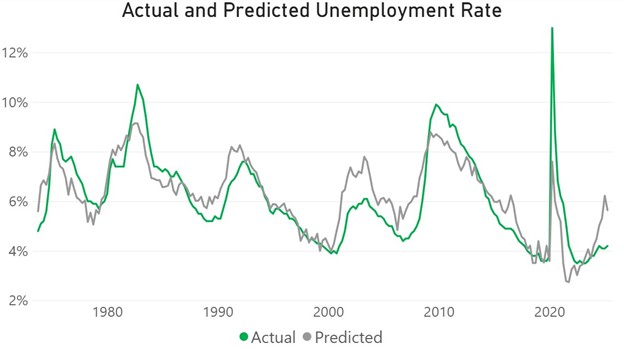
NFIB has been focused on the health of the small business sector since its founding in 1943. In 1973, it initiated a program of regular data collection from its 300,000 member firms to monitor the health of the main street community of firms. Data are available on a public website. One set of questions covers employment, actual hiring, job openings, and hiring plans. Combining the job openings measure with expectations about future business conditions and the percent of owners viewing the current period as a good time to expand to predict the unemployment rate yields a reliable model of the quarterly unemployment rate (Chart 1). Thus, the survey data collected in the first month of a quarter provide a good prediction of the path of unemployment for the quarter.
For the past 10 years, labor quality has become a major concern among small business owners as they compete for talent in a decade long tight labor market. When asked what their single most important problem is from a list of 10 choices, labor quality often ranks as one of the top issues (Chart 2). Over the same period, owners have been paying more to their employees, raising concerns about labor costs.

However, the job market has recently shifted to a more balanced environment. The labor market has eased for many small business owners with fewer owners looking to hire and of those who are hiring, they’re reporting more applicants for their open positions, With this recent shift, NFIB’s survey data suggests an increase in unemployment, with the unemployment rate edging up to higher levels as the economy weakens and uncertainty remains elevated. The dramatic GDP growth numbers will level off as capital spending normalizes in sectors that are not labor-intensive but essential to AI growth (e.g. data centers).
NFIB is a member-driven organization advocating on behalf of small and independent businesses nationwide.
Related Articles