Inflation? Look on Main Street
Inflation? Look on Main Street
March 20, 2026
Inflation? Look on Main Street
There are approximately 36 million small firms (under 500 employees) in the U.S. economy, which produce nearly 44% of our GDP and employ 45% of the workforce. They set the prices for the goods and services they sell. A firm can set any price it wishes, but whether a customer buys depends on whether it is available elsewhere and at what price. This is how competition disciplines prices, forcing businesses to adhere to costs. The only real monopolies are governments.
When governments increase spending without a corresponding increase in taxes to fund it, inflation results. Since 1960, the CPI has increased by nearly 1000%, and the national debt has risen from $286 billion to over $38 trillion to finance it. The interest on this debt is now as large as the defense budget. When the government borrows to pay its debt, it bids up interest rates – unless the Federal Reserve buys the debt (which is money printing).
Chart 1 shows the path of reported price increases and reductions (yes, prices also fall). The rise of inflation in 2021-2022 rivals that of the early 1970s, when Volcker was called in for the “cure.” The frequency of price hikes has declined by more than 30 percentage points since its peak, but it remains historically high, which is not good news for the inflation fighters.
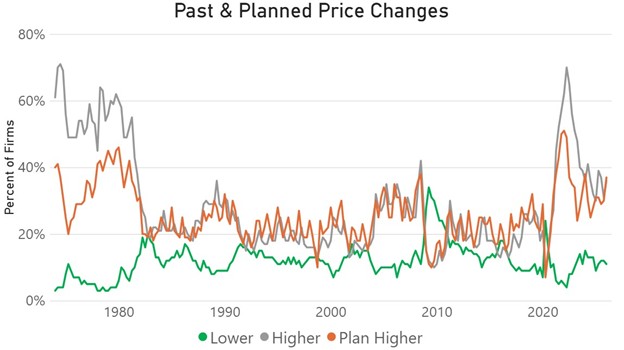
Chart 1: Past and Planned Price Changes. NFIB Small Business Economic Trends.
Chart 2 shows that the frequency of price increases is a good predictor of inflation in the months following the price changes. Chart 2 uses the percent of owners reporting that they raised prices and the percent raising prices by 10% or more in the first month of each quarter to predict the inflation rate for the entire quarter (measured by the Consumer Price Index). The NFIB measures are taken in the first month of each quarter, so, for example, January NFIB data provides a very good estimate of inflation for the entire first quarter as reported by the BLS.
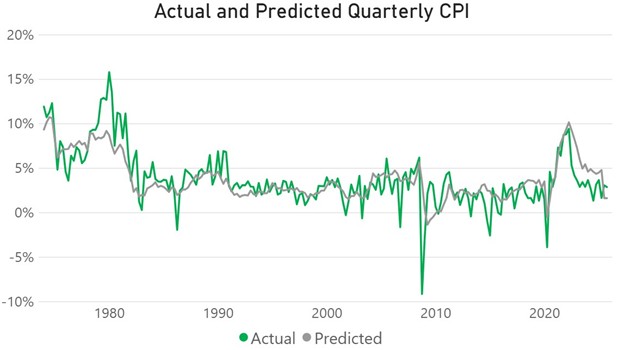
Equation Inflation = 161 + 12 raising + 05 raising 10 R2=57
Inflation pressures are not spread evenly through the economy
The incidence of price increases varies substantially by industry, with wholesale and retail trades firms leading (Table 1). Agriculture saw the most price reductions, with over a quarter (28%) of firms cutting prices and only 19% raising them. Finance was mixed, with nearly 1 in 5 (19%) firms cutting prices while nearly half (46%) raised selling prices (complicated by the use of interest rates to price many products). The highest percent of firms raising prices was 71% in 1974; the second-highest was 70% in 2022. While 36% is high relative to the pre-2020 period, the average since 2020 is 41%.
Table 1: Price Changes by Industry
| Industry | Lower Prices | Raise Prices |
|---|---|---|
|
Industry
Construction
|
Lower Prices
9%
|
Raise Prices
34%
|
|
Industry
Manufacturing
|
Lower Prices
10%
|
Raise Prices
37%
|
|
Industry
Transportation
|
Lower Prices
6%
|
Raise Prices
31%
|
|
Industry
Wholesale
|
Lower Prices
6%
|
Raise Prices
57%
|
|
Industry
Retail
|
Lower Prices
9%
|
Raise Prices
52%
|
|
Industry
Agriculture
|
Lower Prices
28%
|
Raise Prices
19%
|
|
Industry
Finance, Real Est.
|
Lower Prices
19%
|
Raise Prices
46%
|
|
Industry
Non-prof. services
|
Lower Prices
4%
|
Raise Prices
37%
|
|
Industry
Prof. services
|
Lower Prices
2%
|
Raise Prices
29%
|
|
Industry
All firms
|
Lower Prices
11%
|
Raise Prices
36%
|
NFIB is a member-driven organization advocating on behalf of small and independent businesses nationwide.
Related Articles