


Topics:
April 20, 2022 Last Edit: June 5, 2025
Here are our small business owner’s prioirities when lawmakers return on April 25th.
Small Businesses to Kansas Legislature: There is More Work to be Done
- Utility Sales Taxes – Eliminate state sales tax on most utilities that small business owners pay. The legislation would bring parity with the residential sector. Tax related costs and compliance have historically created immense anxiety for small business owners. Right now, small businesses are managing challenges including labor shortages, rising inflation, supply chain disruptions, and COVID-19 variants. (See below). This bill would lower tax costs and compliance on businesses still struggling to recover from the pandemic and government-forced shutdowns.
- Sales Tax Remittance – This legislation provides businesses compensation for collecting and remitting sales taxes to the state. Right now, Kansas retailers are required to collect and remit state and local sales taxes to the Department of Revenue. This onerous mandate comes at a cost to our retailers, particularly our small businesses, in both time and technology. Yet, our small businesses are not compensated for serving as the tax collector for the state. Many other states provide a vendor compensation allowance to retailers, allowing them to retain a percentage of the revenue collected as compensation for their administrative costs.
- Plastic Container Ban – This bill would prohibit local municipalities from adopting or enforcing regulations which restricts, taxes, prohibits or regulates the use, disposition or sale of containers used in food consumption or transportation of merchandise. Many small businesses buy these products in large quantities to take advantage of economies of scale. Restricting their ability to purchase certain products drives up material costs which prevents small business owners from investing in capital improvements and increased employer wages and benefits. Additionally, regulatory compliance is costly and burdensome. Small business owners are asking the legislature to override the Governor’s veto of the bill. YOU CAN TAKE ACTION ON THIS BILL HERE.
- About three-quarters (73%) of small business owners have increased their average selling prices due to supply chain disruptions and/or increased compensation due to staffing shortages.
- Over half (51%) of small business owners reported supply chain disruptions had a significant impact on their business. Another 30% of owners reported it had a moderate impact and 14% reported a mild impact.
- 24% percent of owners are currently experiencing a significant staffing shortage and another 18% are currently experiencing a moderate shortage.
State:
Get to know NFIB
NFIB is a member-driven organization advocating on behalf of small and independent businesses nationwide.
Related Articles

Related
July 27, 2026
Shop Small During New Mexico’s Back-to-School Tax-Free Holiday
Certain back-to-school items will be exempt from sales tax from Friday, July 31-Sunday, August 2
Read More

Related
July 27, 2026
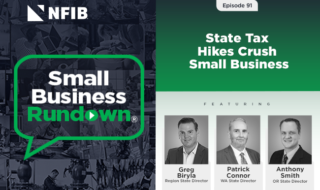
Podcast: State Tax Hikes on the Ballot This Year
Experts on the Small Business Rundown discuss proposed state tax increases and the impact higher taxes would have on small businesses across the nation.
Read More

Related
July 27, 2026
Northern Illinois Sales Taxes Increase August 1
The higher taxes in Northern Illinois are to fund the Chicago-area public-transit system
Read More
Related
July 27, 2026
Arkansas’ Sales Tax Holiday Weekend Is an Opportunity to Shop Small
Certain items will be exempt from sales tax Saturday, August 1-Sunday, August 2
Read More