


Topics:
February 8, 2022
Wisconsin Small Business Owners Overwhemingly Want Lawmakers to Eliminate Designations
NFIB State Director to Government: Stop Picking Winners and Losers
Bill G. Smith, State Director of the National Federation of Independent Business in Wisconsin, the state’s leading small business organization with 10,000 members, testified in support of Assembly Bill 912. The legislation would require all businesses be treated equally during an emergency declaration by the government. It would also eliminate the economic hardship endured by small businesses ordered to close, while their big box competitors remained open for business.
“Small business owners here in Wisconsin are behind this bill because it’s a simple win: it would eliminate the essential and non-essential designations. That means that state government can no longer chose ‘winners’ and ‘losers.’ One of the most challenging parts of COVID mandates here in Wisconsin have been the arbitrary designations by state government. While big box businesses were allowed to stay open, some of our small business owners, who sold some of the same products, were mandated to close their doors,” said Bill G. Smith, NFIB State Director in Wisconsin.
According to a recent NFIB survey of members across Wisconsin, 97% of small business owners indicated support for eliminating the essential and non-essential designations from emergency orders.
Below is Bill G. Smith’s testimony today in front of the Assembly Committee on Small Business Development:
Two years ago, the government decision to require all non-essential businesses to close created significant hardship and uncertainty on Main Streets all across Wisconsin. Many small businesses were unable to sell their goods and services and struggled to generate revenue to pay their employees.
Businesses deemed essential were allowed to remain open, including most big box stores, and were allowed to sell the same products as thousands of small businesses deemed non-essential, which the government ordered to close immediately.
As a result, government chose winners and losers, ordering some businesses to close – deemed non-essential – while allowing others to remain open – essential – often selling the same products or services as those firms ordered to close their doors.
Obviously, the action taken by state government, had a devastating impact on small business owners and their employees, creating significant economic hardship and uncertainty on Main Street throughout Wisconsin.
Small business owners deemed “non-essential” complied with orders while they waited for a better understanding and knowledge of the unique challenges of a pandemic.
These small business owners watched and waited as other businesses were allowed to remain fully operational, able to pay their employees, receive goods, provide services, and for the most part operate as usual.
The cost of the government mandated lockdown of so-called non-essential businesses was devastating for small business employers and their employees, yet minimal impact on controlling the spread of the pandemic.
State:
Get to know NFIB
NFIB is a member-driven organization advocating on behalf of small and independent businesses nationwide.
Related Articles

Related
July 20, 2026
NEW DATA: Wisconsin Small Business Optimism Falls Below National Index
Small business owners in Wisconsin name labor quality and taxes as top concerns
Read More


Related
July 15, 2026
NFIB’s Josh McLeod Joins Radio Show in Milwaukee, Wisconsin to Give Update on Efforts to Repeal BOI Reporting Mandate
Main Street continues urging Congress to help Wisconsin small businesses by repealing the invasive law
Read More
Related
July 13, 2026
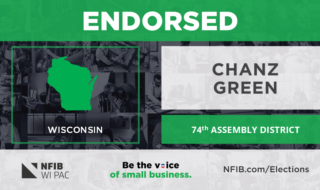
NFIB Wisconsin PAC Endorses Rep. Chanz Green in Republican Primary
NFIB Wisconsin PAC announced its endorsement of incumbent Representative Chanz Green for the 74th District
Read More
Related
July 13, 2026
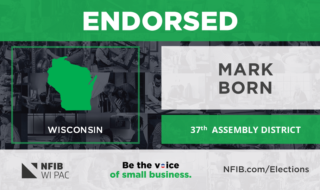
NFIB Wisconsin PAC Endorses Rep. Mark Born in Republican Primary
NFIB Wisconsin PAC announced its endorsement of incumbent Representative Mark Born for the 37th District
Read More