


Topics:
May 18, 2026
Baton Rouge member John Overton writes about the toll rising premiums is having on his firm
NFIB member John Overton wrote the following guest column following a congressional field hearing in Baton Rouge focused on the rising cost of healthcare for small business owners and their employees.
By JOHN OVERTON
I’m part owner of an IT and cybersecurity business with headquarters in Baton Rouge, and every year, more and more of our revenue is spent on health insurance for our employees.
It’s estimated that the cost of living in the U.S. has risen 35 percent since 2017. The amount of money we spend on health benefits during this period has increased nearly 116 percent.
Our employees absolutely deserve a good medical plan, and we continue to provide 100 percent coverage for employee-only medical, dental and vision. But every dollar spent on premiums is a dollar we can’t spend on growing our business or adding jobs.
It’s not just us. Nationwide, only about 32 percent of small businesses offered health benefits in 2025, according to the latest figures from the National Federation of Independent Business. On the other hand, an estimated 96 percent of large corporations use insurance to attract and retain good workers, according to NFIB.
NFIB says health care costs have been the top problem facing small business owners for over 40 years, so I was encouraged to see the U.S. Senate Health, Education, Labor and Pensions (HELP) Committee hold a field hearing in Baton Rouge last week on health care affordability. I am grateful to Senator Bill Cassidy for bringing attention to an issue that affects nearly every small business in Louisiana.
However, this hearing only scratched the surface of exploding health costs. Until Congress addresses the root causes, such as burdensome Affordable Care Act (ACA) mandates, any legislative effort will miss the mark.
The ACA mandates health plans cover 10 Essential Health Benefits (EHBs). This mandated coverage forces small businesses to purchase one-size-fits-all plans that include coverage many employees may never use, eliminating flexibility and driving up premiums.
Similarly, the Medical Loss Ratio (MLR) rule reduces insurers’ ability to innovate on plan design and limits options in the small group market. The MLR has fueled industry consolidation and skyrocketing health costs.
Together, these mandates have contributed to a system where small businesses like mine pay more for less coverage, with little ability to tailor coverage to the unique needs of our workforces.
If Congress is serious about lowering costs and expanding access, it must address these mandates and other root causes driving the significant cost increases. Giving small businesses the freedom to choose more customized, affordable coverage options would level the playing field with larger employers, who have far more flexibility in how they structure benefits.
Congress should expand affordable options that empower small businesses through the use of Individual Coverage Health Reimbursement Arrangements, or ICHRAs. ICHRA’s provide employers an additional option to help workers buy coverage that best fits their needs.
Congress should also eliminate restrictions on affordable short-term health plans, Health Savings Accounts (HSAs) and Association Health Plans (AHPs). These plans provide small businesses with affordable and flexile options, and increase bargaining power to better compete with larger businesses.
Sen. Cassidy talked about giving patients more control over their health care dollars. This is exactly right. Today, 9 out of every 10 health care dollars flows through a third-party, be that government or insurance company. It’s not a surprise that costs continue to explode when consumers have little to no skin in the game.
Until Congress gets serious about what is driving unsustainable health costs, any reform efforts will do little to help small businesses. Congress must address the underlying laws, mandates, and regulations that continue to make coverage less affordable for small business owners, their employees, and their families. This could be accomplished if the legislature followed the NFIB Legislative Health Care Plan, which details ten policy initiatives Congress could take to significantly lower health costs for small businesses.
If there’s one message Sen. Cassidy takes back to Washington, it’s this: When Congress takes action to help small businesses, they help everyone.
John Overton is co-owner and CFO of Turn Key Solutions, an IT and cybersecurity business in Baton Rouge, Metairie and Dallas.
State:
Get to know NFIB
NFIB is a member-driven organization advocating on behalf of small and independent businesses nationwide.
Related Articles
Related
May 20, 2026
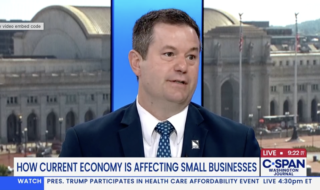
NFIB on C-SPAN: How Small Businesses are Managing Economic Pressures
A discussion on C-SPAN featuring an NFIB expert covers the current state of the small business economy and the top issues that are impacting Main Street.
Read More


Related
May 18, 2026
NFIB Urges Senate Panel to Pass Judicial Transparency Bill
The measure would require greater financial disclosures by witnesses.
Read More

Related
May 18, 2026
Be Sure Your Small Business is Ready for Hurricane Season
The National Oceanic and Atmospheric Administration (NOAA) will release its annual Atlantic hurricane season outlook on Thursday, May 21.
Hurricane season run…
Read More

Related
May 14, 2026
Connecticut Capitol Update
Association Health Plans (AHPs) would have provided small businesses lower-cost health insurance options.
Read More