


Topics:
Price Pressures Have Eased, but Small Businesses Still Feel the Squeeze
Price Pressures Have Eased, but Small Businesses Still Feel the Squeeze
April 8, 2026
Peter Hansen, Director of Research and Policy Analysis and Sebastian Vainstein, Intern
Price Pressures Have Eased, but Small Businesses Still Feel the Squeeze
Small business owners face many daily operational challenges, and elevated inflation adds one more challenge to the list. It’s not just higher prices – it’s thinner margins, tighter cash flow, repricing products, inventory management challenges, and financing costs.
To assess where conditions stand today, this post examines NFIB survey measures of actual price changes, planned price increases, inventory plans, and the relative interest paid by borrowers. Together, these indicators align with national data suggesting that although inflation has cooled from its recent peak, price pressures and associated operational challenges remain elevated. Despite improvement, the small business environment has not returned to the predictable, pre-pandemic conditions needed for confident long-term planning.
A Break from Pre-Pandemic Stability
For the decade leading up to 2020, inflation in the U.S. remained low and stable, generally fluctuating at or below the Federal Reserve’s 2% inflation target. This environment provided small businesses with predictability for pricing, budgeting, and investment decisions. That stability broke down during the pandemic. In 2022, CPI inflation averaged 8.0%, the highest annual rate since the early 1980s.
Inflation moderated in the following years, averaging 4.1% in 2023, 2.9% in 2024, and 2.6% in 2025. Despite the progress, inflation remains above its pre-pandemic pace and the Fed’s 2% target.
For small firms operating on thin margins, such elevated inflation continues to put pressure on pricing, budgeting, and long-term investment decisions.
How Small Business Responded
NFIB survey data shows that as reports of rising labor, materials, and operational costs increased in 2021 and 2022, the share of small businesses reporting price increases for their products and services rose significantly (Fig. 1). The timing indicates that firms were responding directly to higher input costs, adjusting prices in step with market realities. Reported changes slowed rapidly from their peak but leveled off significantly above their historical average of a net 13% of owners reporting that they increased their average selling price over the last quarter.
Figure 1.
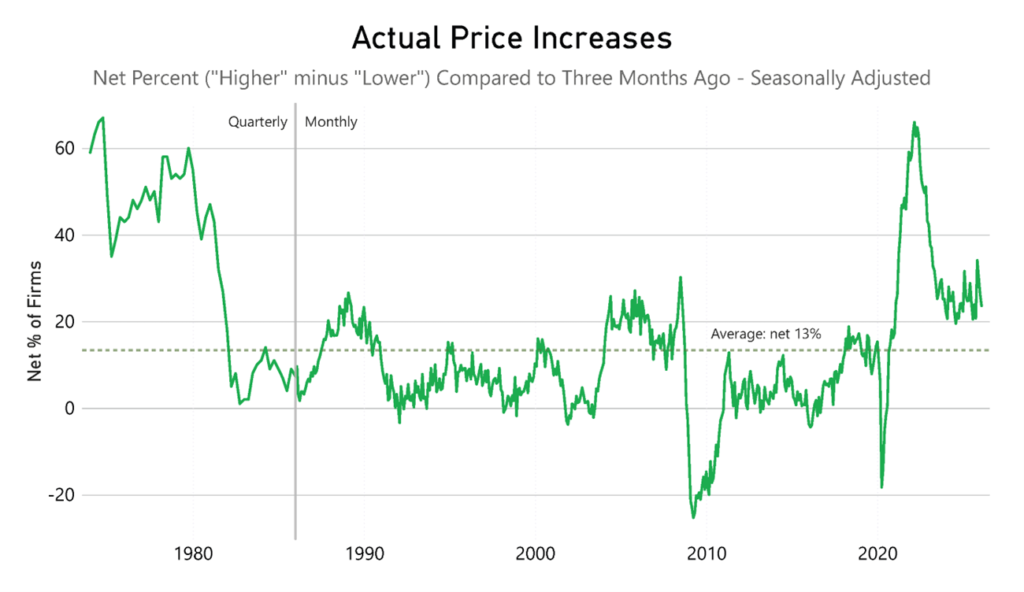
Additionally, NFIB data on planned price changes for the next three months tells a similar story of a major spike that peaked post-pandemic, then rapidly decelerated, but never came back down to its historical norms (Fig. 2).
Figure 2.
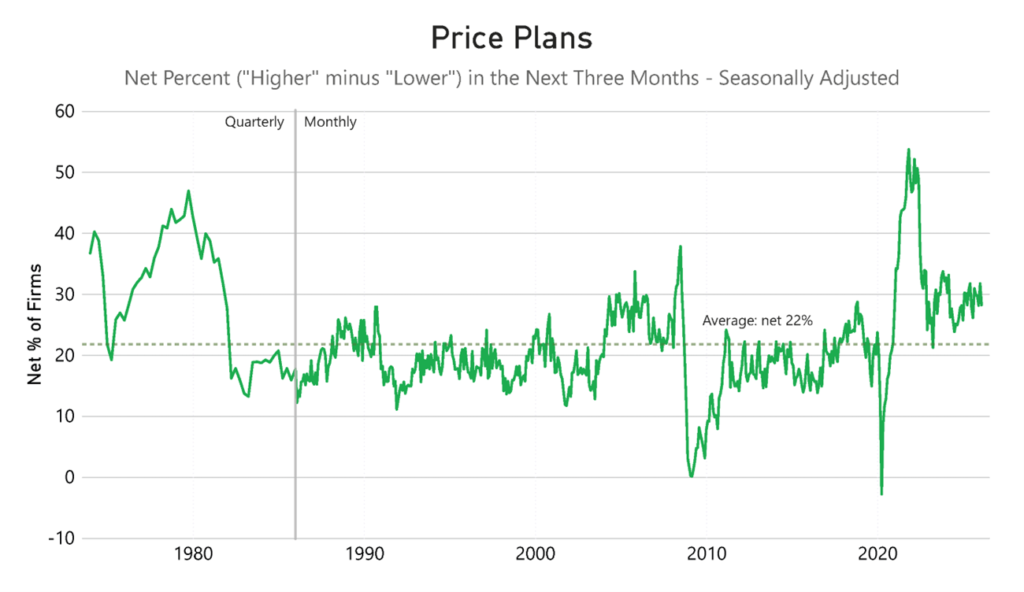
Together, these measures suggest that while the strong pricing adjustments have passed, small firms continue to operate in an elevated-inflation environment that requires more frequent price adjustments than pre-2020.
Planning Under Elevated Inflation
Elevated inflation also affects the timing of purchases and financing strategies. When firms expect input prices to rise, there is an incentive to accelerate inventory purchases to lock in current prices. NFIB survey data shows that plans to increase inventories rose during the 2021-2022 inflationary surge (Fig. 3).
Figure 3
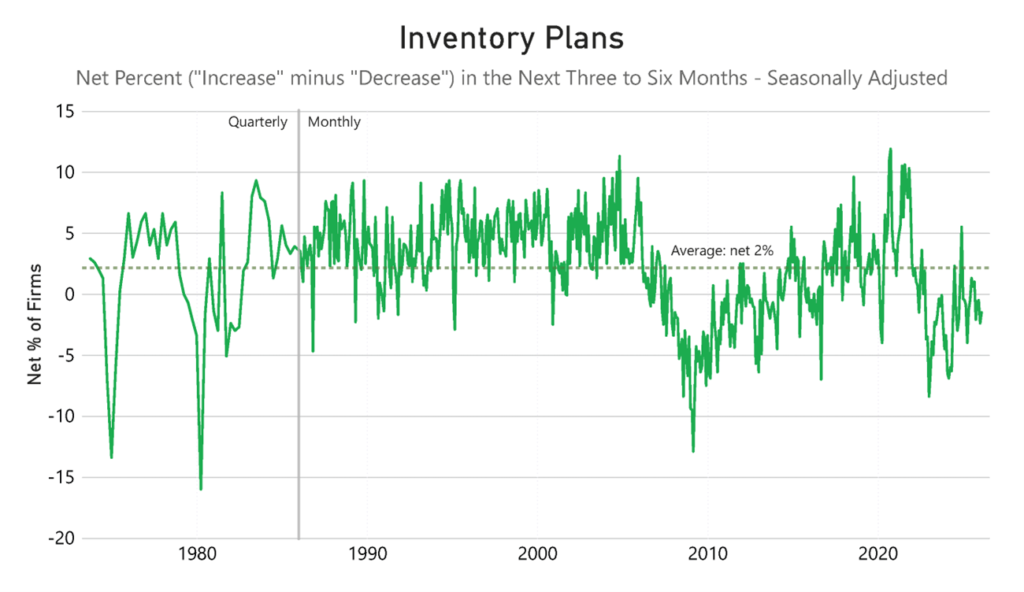
The increase in inventory plans during this period is consistent with firms attempting to buy in advance because of the expectations that costs would continue to increase. As inflation has moderated, inventory plans have decreased as well, indicating that the urgency to accelerate purchases has diminished. However, perhaps reflecting ongoing price instability, it is still more volatile relative to the pre-2020 period.
During the period of higher inflation levels, the Fed raised interest rates to contain inflation, which increased borrowing costs for small businesses. The Effective Federal Funds Rate climbed from 0.08% in January 2022 to 4.33% in January 2023, eventually reaching 5.33% in August 2023. The NFIB measure of the relative interest paid by regular borrowers rose during the tightening cycle, indicating that financing became more expensive and restrictive for small firms (Fig. 4).
Figure 4.
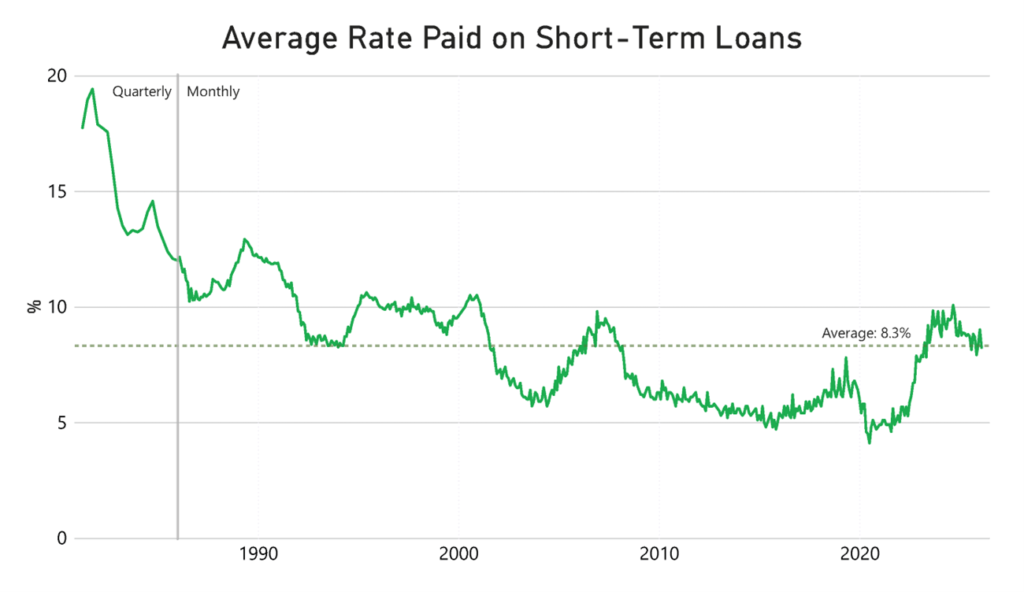
Access to credit is a critically important factor in small business operations, especially for growth cycles and those in capital-intensive industries. When borrowing costs rise, the return required to justify new investment rises too. Projects that were financially viable under lower rates may no longer generate sufficient expected returns. As a result, even as inflation pressure decreases, tighter financial conditions can constrain expansion plans and maintain certain types of cost pressures.
Taken together, the inventory and borrowing cost data shed light on how inflation changed small firms’ management of both purchases and financing. While inventory plans have moderated and borrowing costs have declined, the small business environment has not fully returned to the more stable conditions that characterized the pre-pandemic period.
When Will Stability Fully Return?
Pricing pressures have moderated, inventory urgency has decreased and borrowing costs have declined from recent highs. However, key indicators—selling price changes, planned price changes, inventory plans, and the cost of borrowing—remain elevated and less stable than during the decade before 2020. For small businesses, long-term stability in both input costs and financing conditions is an essential confidence-builder for long-term planning and investments.
Get to know NFIB
NFIB is a member-driven organization advocating on behalf of small and independent businesses nationwide.
Related Articles

Related
July 24, 2026
NFIB’s Josh McLeod in Washington Examiner: Congress Needs to Repeal Invasive Beneficial Ownership Reporting Mandate
NFIB’s Josh McLeod in Washington Examiner: Congress Needs to Repeal Invasive Beneficial Ownership Reporting Mandate
Small businesses urge lawmakers to secur…
Read More

Related
July 23, 2026
Small Business Optimism on the Rise in June
Small business optimism in the June Small Business Economic Trends report increased, while the Employment Index remained steady. The Uncertainty Index fell two…
Read More

Related
July 23, 2026
AUDIO: Small Business Rundown Highlights Why BOI Remains a Major Threat to Small Businesses
Podcast episode features NFIB Member Nancy Marr, U.S. Rep. Brad Finstad, and NFIB’s Josh McLeod explaining what to know about Beneficial Ownership reporting
Read More
Related
July 23, 2026
Report Card on Nevada Legislators Released
NFIB’s voting record reveals who the real friends of small businesses were
Read More