


Topics:
May 22, 2025
NFIB Launches New State-Specific Tools to Highlight Benefits of 20% Small Business Tax Deduction in North Dakota
The National Federation of Independent Business (NFIB), the nation’s leading small business advocacy organization, has released two new digital tools to help small business owners, policymakers, and the public in North Dakota understand the significant economic impact of the 20% Small Business Tax Deduction and what’s at stake if Congress fails to make it permanent.
The new tools include an interactive map that allows users to explore how extending the Small Business Deduction would power job creation and GDP growth in every congressional district across North Dakota. NFIB also launched a tax calculator to provide small business owners in North Dakota with personalized estimates of how much more they could owe in federal income taxes in 2026 if the deduction expires.
Click here to explore job growth and GDP impact across North Dakota. View the interactive map here and the calculator here.
“These new tools give small business owners and elected leaders in North Dakota real data about the economic stakes,” said NFIB North Dakota State Director Don Larson. “If Congress fails to act, millions of small businesses across the country—including right here in North Dakota—will face a massive tax hike. That means fewer jobs, less investment, and slower growth for our communities. The North Dakota Congressional Delegation fortunately recognizes this and supports making the 20% small business tax deduction permanent. We urge Congress to join our lawmakers and make the 20% Small Business Tax Deduction permanent.”
According to NFIB’s interactive map, if the deduction is extended, North Dakota could see an increase of 7,330 jobs and $467,000,000 in GDP over the next decade. The district-level data allows lawmakers and local leaders to understand exactly how small businesses in their communities stand to gain when the tax deduction is made permanent —or lose if it is not.
The tax calculator helps individual small business owners project their potential tax increase if the deduction is not extended. For example, a North Dakota small business owner with a personal income of $75,000 and qualified business income of $150,000 could see a tax increase of more than $13,000, depending on their full financial profile.
NFIB also applauds the U.S. House of Representatives’ passage of the One Big Beautiful Act this morning. The One Big Beautiful Bill Act is one of the most pro-small business pieces of legislation in recent history. Congress has a historic opportunity to provide over 33 million small business owners with permanent tax relief.
To explore the tools and learn more about how NFIB is working to protect North Dakota’s small businesses, visit: www.SmallBusinessDeduction.com
State:
Get to know NFIB
NFIB is a member-driven organization advocating on behalf of small and independent businesses nationwide.
Related Articles
Related
June 23, 2026
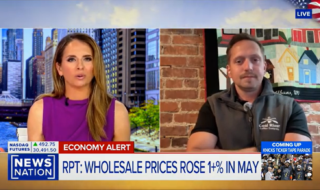
West Virginia Small Business Owner Joins NewsNation to Discuss 20% Small Business Deduction
Watch NFIB Michael Ervin on NewsNation.
Read More

Related
June 22, 2026
VIDEO: On NewsNation, NFIB Member Discusses How 20% Small Business Deduction Has Provided Certainty For Small Businesses
WASHINGTON, D.C. (June 22, 2026) – West Virginia small business owner and NFIB member Michael Ervin joined Markie Martin on NewsNation Thursday to discuss the …
Read More
Related
June 18, 2026
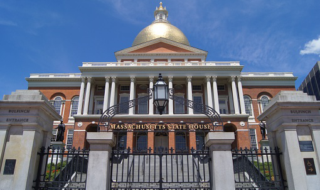
NFIB Reacts to MA Supreme Judicial Court Decision on Ballot Question Rolling Back the Income Tax Rate to 4%
NFIB had filed an amicus brief against the lawsuit in April.
Read More
Related
June 17, 2026
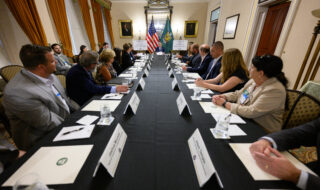
Small Business Owners Bring Viewpoint to Capitol Hill
NFIB members traveled to Washington D.C. for NFIB’s Fly-In to attend meetings with members of Congress. Take action to amplify their voices!
Read More